
When asked what my ‘standout’ moths of the year are, it’s always a difficult question to answer. Yes, there are a few that stand out above the others for me personally, but there are also lots of wonderful records to choose from.
Best moths of 2025

Striped hawk-moth / Lou Collings
Moth recorder Lou Collings highlights Alderney’s top moths of 2025.

Death's head hawk-moth / Andrew Eggleston
So, No. 1 must be the death’s head hawk moth, generally a rare immigrant. This year’s record was particularly important as we get occasional sightings of the caterpillar here in all of its yellow and green glory but to see an adult is very special, and to rear a caterpillar, watch it pupate, hatch into a magnificent squeaking adult and then fly off into the night for more adventures is even more enchanting.

Striped hawk-moth / Lou Collings
No.2 is the striped hawk moth just for the infrequency of beholding these magnificent insects and the absolute excitement of trapping one in my trap this summer.

Six-belted Clearwing moth / Thanh Doan
No.3 The six-belted clearwing was a first for me and also included because of the joy it brought to the team and to the member of the public taking part in a citizen science BioBlitz on Braye common.

Scarce Silver-lines / Lou Collings
No.4 is the scarce silver lines and again another first for me and such a beautiful moth in all its iridescent green and bat high-frequency-sound mimicry. Such a joy to find it in one of our ‘on safari’ traps in St. Anne’s church yard this summer.

Golden twin-spot / Lou Collings
No.5 is definitely the golden twin-spot for its beauty, abundance and the ability to take over my greenhouse as what most would say ‘a pest’. I gladly and some may say sadly let a munching of curious green caterpillars take over and largely consume my tomato crop. I was fascinated to see what they would turn into. I was not disappointed when the first ones started to hatch from white fluffy cocoons, many attached to developing tomatoes. What beauties and so uncommon to see them in such a pristine state. There must have been more than 20 in the end and certainly this boosted our previous numbers in the records.

Campion moth / Lou Collings
No.6 probably the campion in all its pinkish-purple tinted splendour. Although not new to our records this moth has not been commonly recorded in recent years unlike the similar Lychnis which is often plentiful. It is a beautiful moth, to my eyes, a little like the orache in its subtle understated beauty.

Burnished Brass moth / Lou Collings
No.7 a single burnished brass creeps into the top 10 as a result of its amazing flashy coat.

Red underwing and blue underwing / Daniel Whitelegg
No.8 the red underwing is always a joy to see in a trap even if this one had seen better days with some wing damage. This is closely followed by
No.9 the blue underwing (Cliffden non pareil) which is also great to see in its huge beauty of pale blue flashes of underwings. Even more spectacular is the underside with its subtle white powdery stripes.
No.10 is taken by the four-spotted footman as this year we have seen a huge rise in the number of these lichen-loving moths, both males and females in all of their glory. The males with their navy inky legs and the females with the spots of their name are always favourites with keen young moth enthusiasts to show differences between the sexes of some species of moths.
I could easily have included the Devonshire wainscot which hasn’t been recorded for a while or the fact that we saw huge numbers of waved umbers and willow beauties this year. Another moth, a day flyer and as such only occasionally found in traps, and which has been very numerous this year was the hummingbird hawk moth seen visiting valerian on walls and lavender in gardens.

Red-necked footman / William Bill Black
Red-necked footman has been recorded less in recent years so it was nice to see these appear in summer traps.
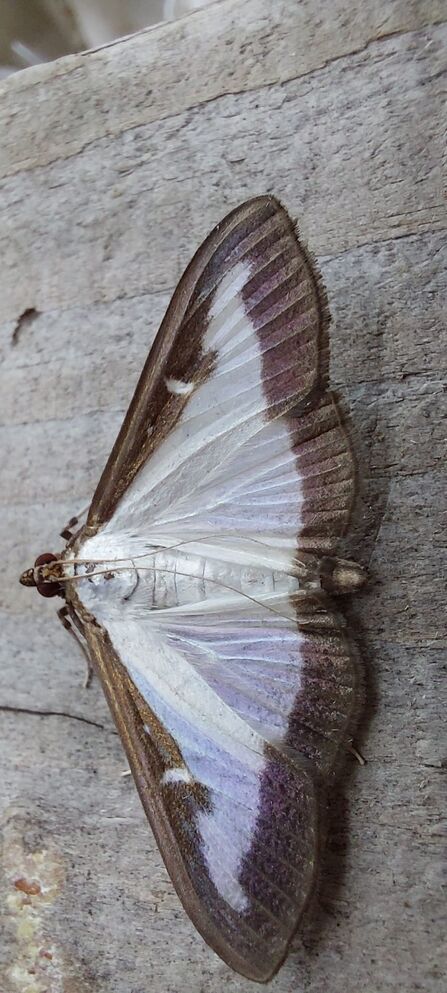
Box-tree moth / Lou Collings
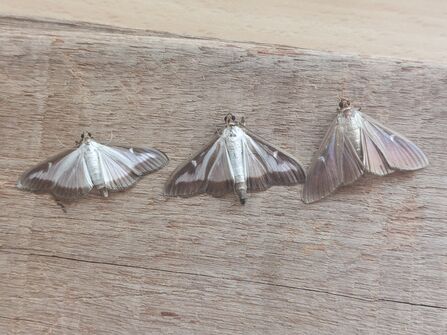
Box-tree moths (three variants) / Lou Collings
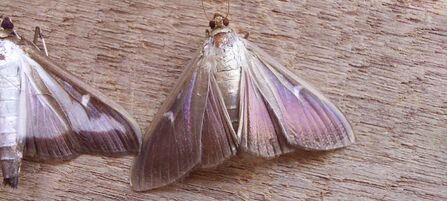
Box-tree moth / Lou Collings
Box-tree moths of all three variants have also continued to rise in number this year but fortunately, as yet, their caterpillars have not been noted to be a garden pest.
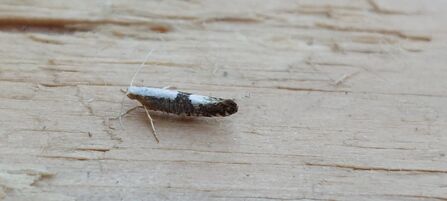
micro-moth / Lou Collings
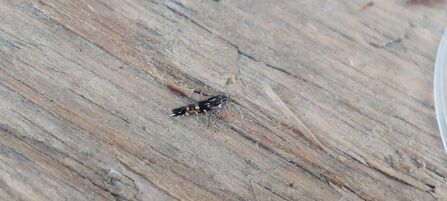
Pellitory beauty moth / Lou Collings
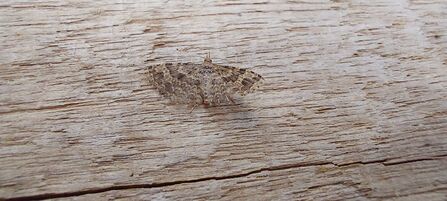
Twenty-plume moth / Lou Collings
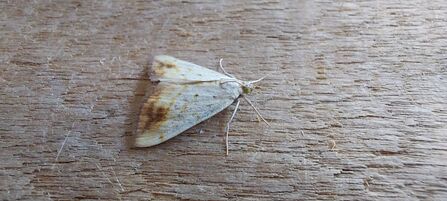
Marbled-yellow pearl / Lou Collings
We have recorded greater numbers of micro-moth species this year in a concerted effort to learn more of the general biodiversity of moths on the island.
So bring on 2026 and all those moth jewels welcome to our traps!